Citigen District Energy Network
E. ON owns and operates the low carbon district energy system
Location: London, Farringdon
Citigen is the largest urban heating and cooling trigeneration plant in the UK.
Hidden away in the heart of London, the heat network covers 11km of pipework, providing low carbon electricity, heating and cooling for the equivalent of 11,300 homes or businesses. These properties include the Smithfield Market, the Barbican and many commercial properties in City of London. The network is powered by an impressive array of Combined Heat and Power engines, gas boilers, and a ground source heat pump. The on-site thermal store with a capacity of 320,000 litres for hot water allows for increased flexibility of heat generation, allowing Citigen to use excess renewable energy on the grid to store heat. This flexibility combined with the 4MW ground source heat pump which draws natural warmth from the London Aquifer via 3 boreholes, reduces the CO₂ emissions of the network by around 30%.
Key facts
- Citigen District Energy Network: 11km of pipework, 30+ substations, 28 connected buildings, serving the equivalent of 11,300 homes and businesses
- Citigen is also home to the UK Control Centre which monitors 70 district heating sites over 40,000 residential customers and over 200 SMEs
Local impact
- Citigen is a significant solution for the City of London’s environmental goals.
- Originally a coal fired power station, the site shows that local low carbon heat is possible whilst protecting local jobs and providing quality energy to consumers.
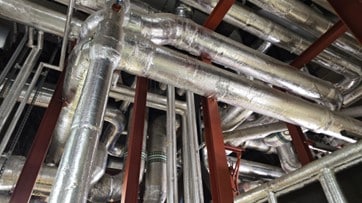
Photo credit: ADE Heat Networks / Caption: Inside of the Citigen power plant
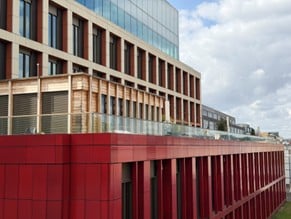
Photo credit: ADE: Heat Networks / Caption: Heat decarbonisation through heat networks frees up valuable rooftop space for commercial clients, especially for buildings like this one, located next to the Citigen power plant that supplies the network.
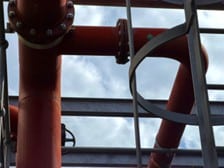
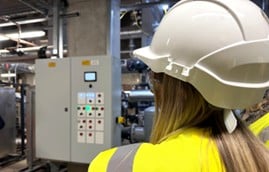
Photo credit: ADE: Heat Networks
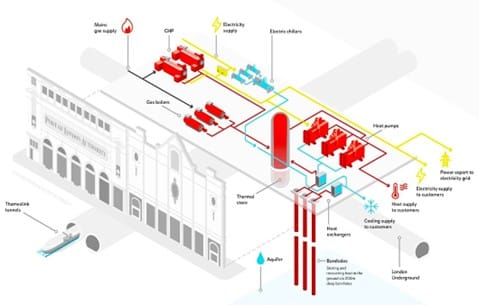
Photo credit: E. ON UK